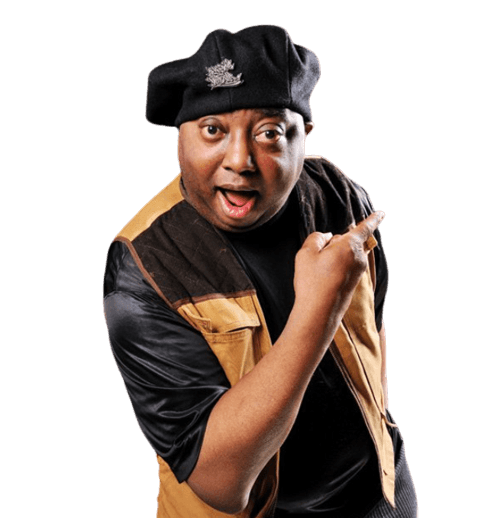
Campbellock Jr. · Mentor · Pioneer
The Line Captain
Dave Gregory Pope, his mentorship and the educational structure he built for Locking.
Dave Gregory “Greg Campbellock Jr.” Pope was a master improviser, choreographer and teacher. To me, he was something even more important: my mentor. This page is about the man, the visionary and the educational structure he built to help lockers understand the dance in depth.
Personal memory / Sweden
My mentor – and a mentor to many
Greg was my mentor. To me, he was one of the very best – a mastermind with vision who could see both the dance and the person behind it.
He mentored dancers around the world. I believe many of us would never have learned Locking at the same depth without him. He passed on more than movement; he gave us a way to think, listen, train and discover our own character.
This is also an important part of my Swedish connection to Locking. What I brought home was not only steps, but his understanding of the dance as a complete language – with body control, musicality, precision, attitude, imagination and funk.
Soul Train / Creative Generation / The Lockers
From pioneer to teacher
Greg danced in the Los Angeles club scene and became a regular Soul Train dancer. In 1972, he was part of Creative Generation at the Watts Writers Workshop alongside several other early lockers. The group brought improvisation, synchronized routines and stagecraft together.
In 1973, he became one of the seven original members of The Lockers. Sources describe him as the group’s “line captain” and as an important link between social dance, the pioneers’ steps and the choreographed stage form.
Teaching became increasingly central to him during the 1990s. Around the turn of the millennium, he traveled internationally as a teacher, judge and performer. His legacy therefore lives not only in what he danced, but in all the people he taught, encouraged and trusted to carry the knowledge forward.
Structure / Vision / Pedagogy
A curriculum for a living dance
Greg made a major contribution to articulating a Locking curriculum. His notes reveal a teacher who wanted to make the invisible visible: how the body is controlled, how music becomes movement, how character is created and how separate parts combine into a funky style.
The structure does not freeze the dance. It helps the dancer understand what can be varied. Technique becomes a foundation for improvisation, imagination and personal expression – not a replacement for them.
The 4 attributes of Locking
In the material, Greg identifies four attributes that meet within a locker. They are not four separate steps, but four qualities intended to live throughout the dance.

- 01
Attitude
Attitude
Presence, conviction and a clear point of view. The dancer shows who they are and directs their energy outward.
- 02
Style and Grace · Body control
Style and grace
Body control creates lines, balance and intention. Style lives in how a movement is shaped, not only in which movement is chosen.
- 03
Become animated
Characterization
The locker becomes animated, allowing the face, gestures, humor and personality to take an active part in the dance.
- 04
Hear every instrument
Pure Funk
Hearing the instruments and responding to the beats, layers and accents of the music. Musicality drives choices in the moment.
BC + EC + PMw/m
Greg’s formula for “Funky Style”
Another image summarizes the method as an equation. It complements the four attributes by making three areas of practice explicit:
Control of shape, direction, balance and stops.
A vivid, engaged character that communicates with the audience.
Movement placed precisely in and together with the music.

Five movement families
Greg’s text “The Locking artform and movement” organizes the material into five families. The point is not that every part alone is Locking, but that the art form emerges when they are combined with understanding.
- 01
Improvisational Locking
Improvisation and technical foundation
Locks, points, hand slaps, wrist rolls, freezes and other foundational movements used within freestyle.
- 02
Synchronized Locking Steps
Synchronized Locking steps
Steps developed by several pioneers and used by individuals, duos and groups to construct routines.
- 03
Show-stopping moves
Stunts and tricks
Splits, knee drops, dives, flips and prop tricks that find their place in Locking when integrated with the rest of its language.
- 04
Social Party Dances
Social party dances
The social dances of the time provide groove, timing and transitions between Locking movements while keeping the dance-floor connection alive.
- 05
Specialty dances
Specialty dances
Robot, slow motion and mime are distinct forms that can be woven in to create contrast, animation and new combinations.

Greg Campbellock Jr. & Associates
The ideas on paper
The preserved illustrations show Greg thinking visually: a key between “no lock” and “lock”, different degrees of precision, lines through the body and imagination growing from the ability to feel the music.
 Open original image
 Open original image
 Open original image
 Open original image